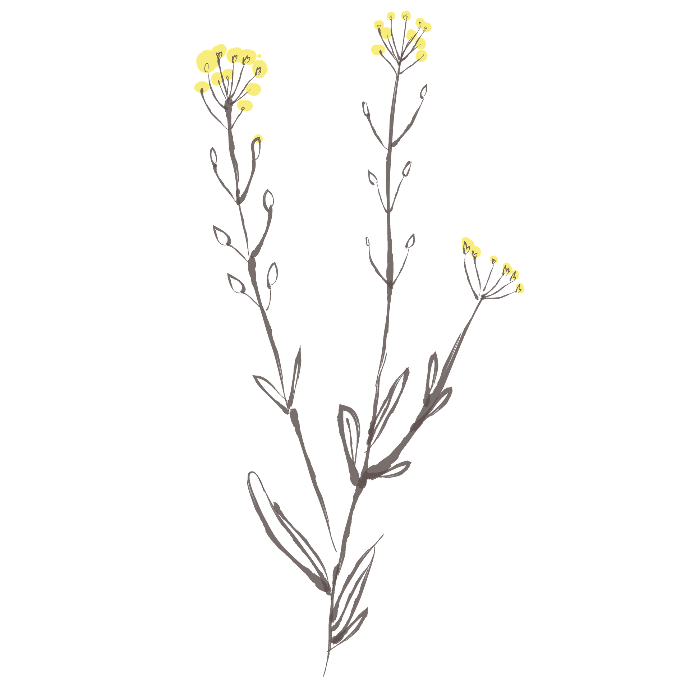
Also known as “false flax,” camelina oil has a distinctive herbaceous scent reminiscent of freshly cut grass. A hardy crop, camelina is resistant to disease and well adapted to Europe’s variable climate conditions.
Its very light texture makes it a fast-absorbing oil with a dry finish, particularly pleasant to use in natural cosmetic products.
Its exceptionally high omega-3 content makes camelina oil a rare and valuable ingredient in natural skincare.
At Siprès, we use camelina in the form of a virgin, cold-pressed vegetable oil.
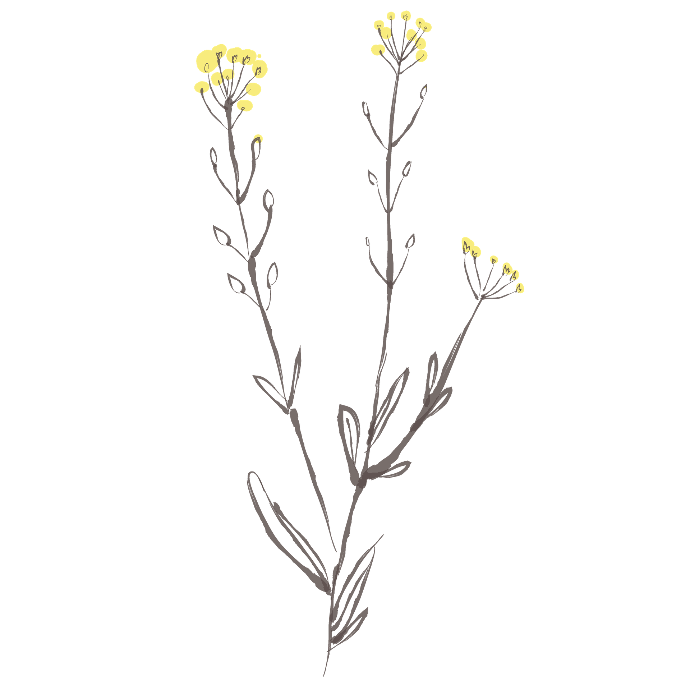
Egalement appelée "lin batard", l'huile de cameline a une odeur herbacée assez caractéristique, comme de l'herbe fraichement coupée. Peu exigeante, la cameline résiste bien aux maladies et aux conditions climatiques variables de l’Europe.
Sa texture très fine en fait une huile bien pénétrante, agréable à utiliser dans des produits cosmétiques naturels avec un toucher sec.
Chez Siprès, nous utilisons la cameline sous forme d'huile végétale vierge, de première pression à froid.
PROPERTIES
Soothing and anti-inflammatory thanks to its high omega-3 content, camelina oil is renowned for caring for sensitive and reactive skin (redness, irritation, sunburn, eczema). It is also known to help soothe diaper rash in babies.
Nourishing and antioxidant thanks to its richness in omega-6, omega-9, provitamin A, and vitamin E, camelina oil helps combat fine lines and visible signs of ageing. It improves skin elasticity while helping strengthen the skin barrier and reduce moisture loss.
It is also beneficial for fine, dull, and brittle hair, which it nourishes, protects, and softens.
The properties and dry-touch texture of French camelina oil make it a particularly interesting ingredient in natural skincare products for oily-prone hair and skin prone to inflammation, such as acne-prone or couperose-prone skin.
HISTORY
Native to Europe, camelina is a hardy plant from the same family as broccoli. It has been cultivated for centuries for animal feed and for the production of a drying oil (an oil that hardens upon contact with air), which was widely used until the 19th century in the manufacture of soap and paint.
After a period of relative neglect, camelina was rediscovered by agronomists in the late 20th century because of its nutritional and cosmetic benefits, particularly its exceptional omega-3 content.
ORIGIN
Camelina is grown in France using sustainable farming methods on a small family-run farm. The producer operates a traditional press, allowing the seeds to be pressed as orders are received. Great care and expertise go into producing camelina, evening primrose, and borage oils from seeds harvested directly from the farm’s fields.
EXTRACTION
Siprès camelina oil is cold-pressed to preserve all of its natural properties.
INCI
CAMELINA SATIVA SEED OIL