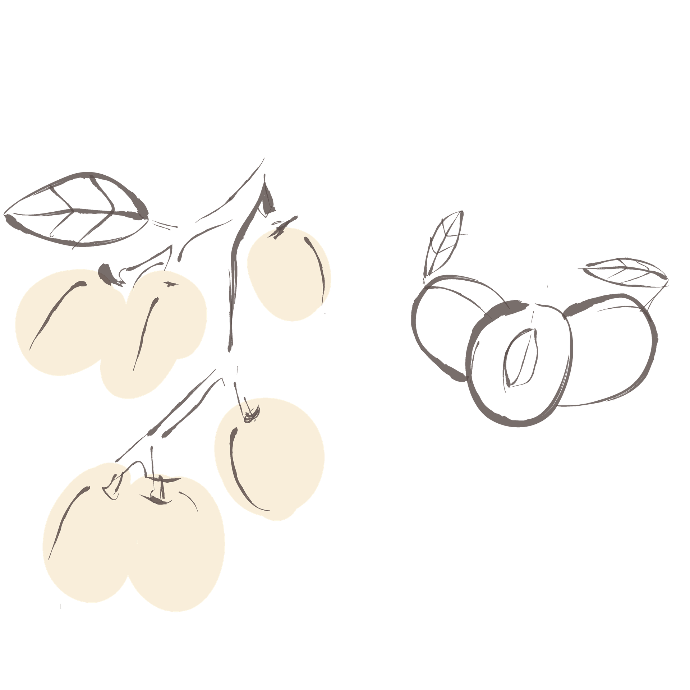
Mirabelle vegetable oil is a “terroir” oil that comes, of course, from Lorraine, the land where mirabelle plums thrive. It is one of our “upcycled” oils: it is made from pressing the kernels (the core inside the stone) of the fruit, which are separated from the hard shells by crushing the pits. It therefore helps valorise a by-product of the agri-food industry.
This rare, non-greasy oil, with a light bitter almond scent, offers very interesting benefits for the skin.
At Siprès, we use mirabelle in the form of virgin vegetable oil, cold-pressed.
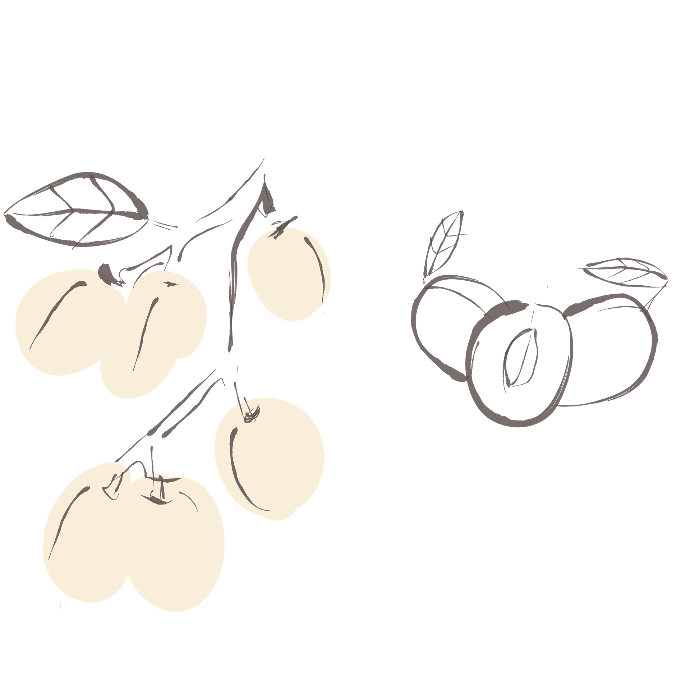
L’huile végétale de mirabelle est une huile « de terroir » qui provient bien entendu de Lorraine, la terre d’élection de la mirabelle. Elle fait partie de nos huiles "upcyclées" : elle est fabriquée à partir du pressage des amandons (cœur du noyau) du fruit qui sont séparés des coques dures par concassage des noyaux. Elle permet donc de valoriser un déchet de l'industrie agro-alimentaire.
Cette huile rare, non grasse, au parfum léger d’amande amère, a des bienfaits très intéressants pour la peau.
Chez Siprès, nous utilisons la mirabelle sous forme d'huile végétale vierge, de première pression à froid.
PROPERTIES
Moisturising, mirabelle oil helps strengthen the hydrolipidic film and limit water loss.
Protective, it helps shield the skin from external aggressions (pollution, wind, cold…).
Softening and repairing, it improves skin elasticity and helps prevent the first signs of ageing.
As a precaution, people allergic to nuts, such as hazelnuts, should avoid using mirabelle oil.
HISTORY
Like other plums, mirabelle originates from the East. It was introduced to France in the 15th century. Because clay-limestone soils suit it well, it developed particularly in the Metz region and became a local specialty.
By the mid-18th century, “Mirabelle de Lorraine” was already recognised as such. Production intensified after the phylloxera crisis in the early 20th century, which destroyed many vineyards in Lorraine. Vineyards were then largely replaced by plum orchards after World War I. At its peak around 1950, production later declined.
However, in the early 1990s, farmers planted thousands of mirabelle trees, grouped under the “Mirabelles de Lorraine” label and obtained a Protected Geographical Indication (PGI) from Europe, highlighting the link between product quality and its territory. Today, Lorraine accounts for 80% of global mirabelle production.
ORIGIN
Mirabelle oil comes from a cooperative bringing together more than 200 mirabelle producers in Lorraine (organic farming). The cooperative handles harvesting, processing, packaging and selling the fruit, ensuring full traceability.
EXTRACTION
Siprès mirabelle oil is cold-pressed to preserve all its properties.
INCI
PRUNUS INSITITIA SEED OIL