When you see “Made in Belgium” on a cosmetic product, your first thought is probably:
“Great, it’s local.”
And you’re not wrong, at least, not entirely.
But what this label actually means is far more technical, and often far less comprehensive, than we tend to assume.
Under European regulations, a product can be labelled “Made in Belgium” if its final substantial transformation took place in Belgium. In practice, this means the formulation, blending, manufacturing or final packaging happened locally.
However, the raw ingredients themselves can come from anywhere in the world.
Yes, a product can be “Made in Belgium” while its ingredients have travelled thousands of kilometres before reaching your bathroom.
And that’s where everything changes.
What truly matters: ingredient origin
In natural skincare, the quality of a product depends directly on the quality and freshness of its ingredients.
Take borage oil as an example.
Nearly 98 percent of global production comes from China. These oils are often produced on a large scale, typically refined rather than cold-pressed. They are transported for weeks in containers, stored in warehouses, sold through intermediaries, and eventually incorporated into cosmetic formulas.
By the time they reach your skin, much of their nutritional value is lost.
By contrast, a borage oil sourced from plants grown in Belgium or France, cold-pressed by the farmer and sent directly to the lab, retains a far richer profile of omega fatty acids and vitamins.
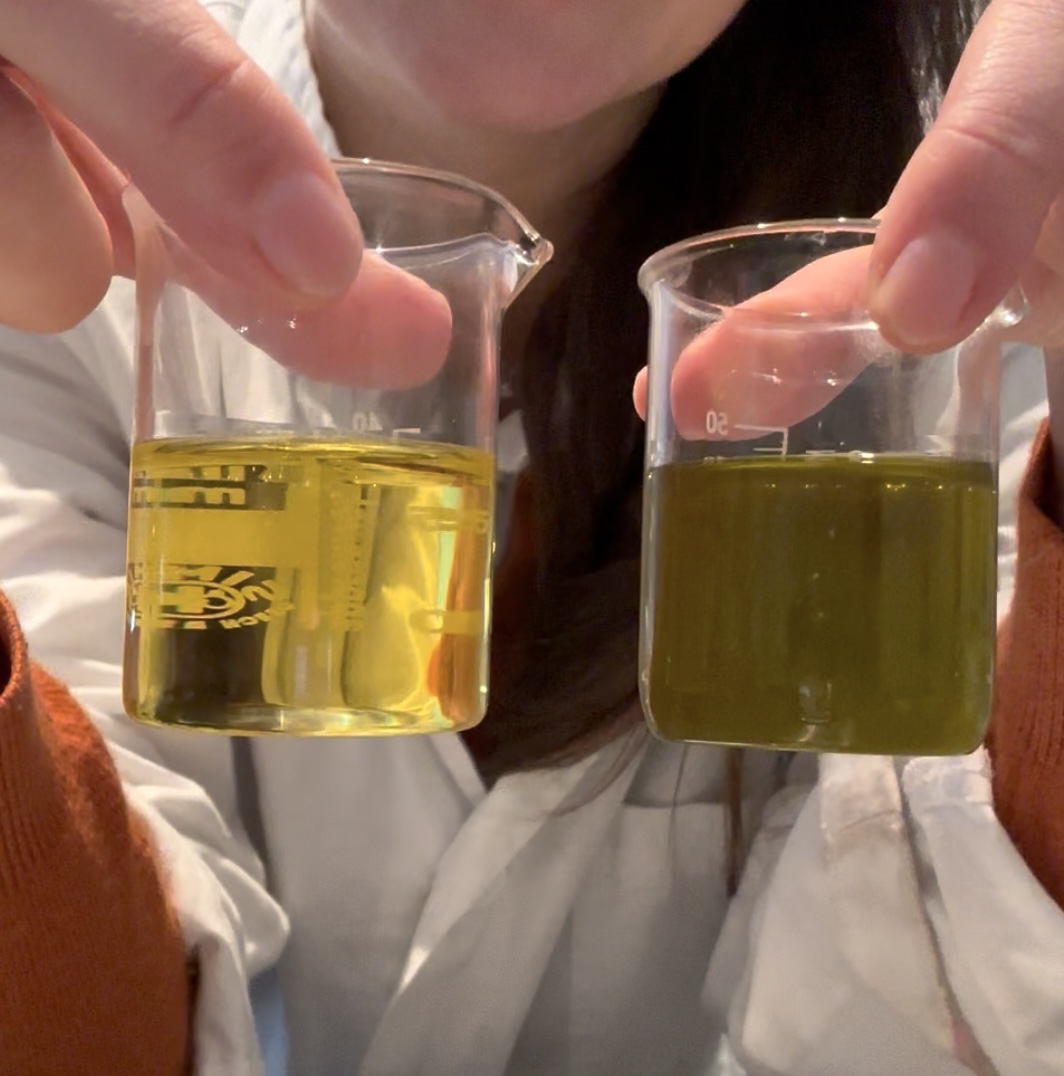
Camille, founder of Siprès, compared a Chinese borage oil with a Belgian one. The Belgian oil had a distinct, grain-like scent typical of borage. The imported oil had almost no scent at all. While this neutrality may seem convenient for formulation, it is not a sign of quality. A plant oil with natural colour and aroma is often the result of gentle extraction and preserved active compounds.
The same applies to sunflower oil. Much of the global supply comes from international sourcing chains, where oils travel long distances, are stored for extended periods, and pass through multiple intermediaries. A freshly cold-pressed Belgian sunflower oil, used quickly after production, retains far more of its natural properties, including omega 9 and antioxidants.
On paper, both products may be labelled “Made in Belgium”.
But for your skin, the difference is significant.
Freshness: the invisible factor
Plant oils and essential oils are living materials. Their quality depends on extraction methods, time between production and use, transport conditions, and storage duration.
The longer they travel and sit in storage, the more they lose their natural potency.
It’s much like cooking.
Imagine a summer salad made with freshly picked green beans. Now imagine the same recipe made with canned ones.
Both are homemade.
But the taste and nutritional value are worlds apart.
In skincare, the same principle applies.
The hidden carbon footprint
Imported ingredients often travel across continents. Seeds may cross oceans by cargo ship, be processed in another country, pass through intermediaries, and finally be packaged elsewhere before arriving in Belgium. During this journey, they can be stored for months — sometimes even years.
A product may be assembled locally, while carrying a significant environmental footprint upstream.
The place of final manufacturing only tells part of the story.
At Siprès, we go beyond “Made in Belgium”
Yes, our products are made in our lab in Nivelles.
But for us, that’s not enough.
We choose to work exclusively with Belgian and French producers for our raw materials.
Cold-pressed plant oils.
Locally distilled hydrosols.
Essential oils sourced through short supply chains.
Our ingredients are sent directly from the producers to our workshop.
This approach reduces intermediaries, limits transport, and ensures maximum freshness.
The result: skincare that is richer in active compounds, fully traceable, and more aligned — for both your skin and the planet.
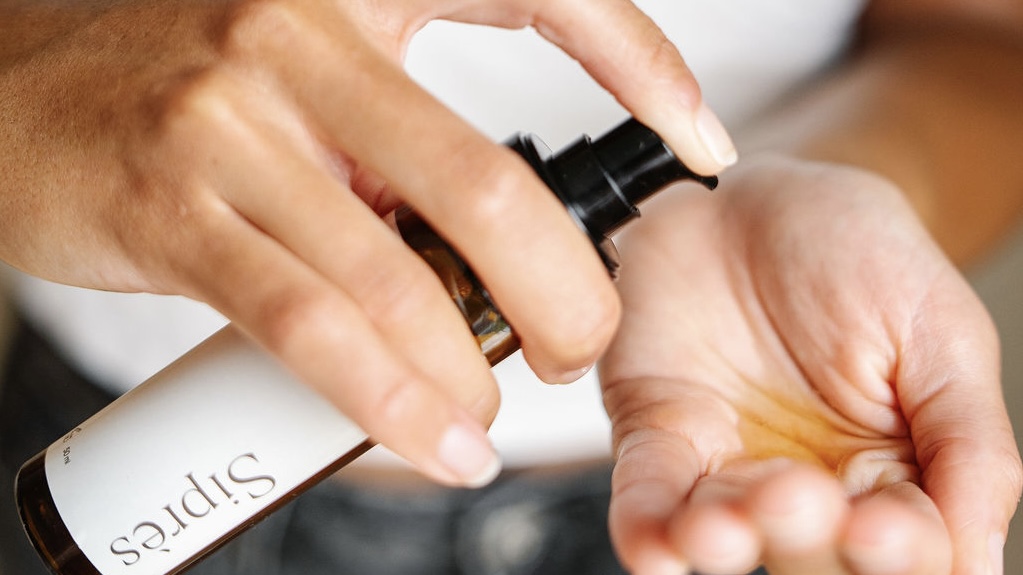
“Made in Belgium” is a starting point — not the whole story
A product can be made in Belgium using ingredients from around the world.
Or it can be designed holistically, from the origin of the plants to the final bottle.
For us, the real question is not just: Where is it made?
But rather: Where do the ingredients truly come from, and in what condition do they reach your skin?
And that changes everything. 🌿